
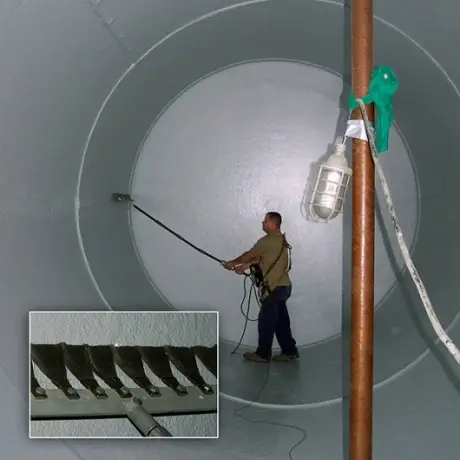
Spark Testing | Holiday Test
Performed on conductive objects that are coated with highly electrical resistant material, such as items lined with rubber, urethane, glass or other non-conductive coatings.
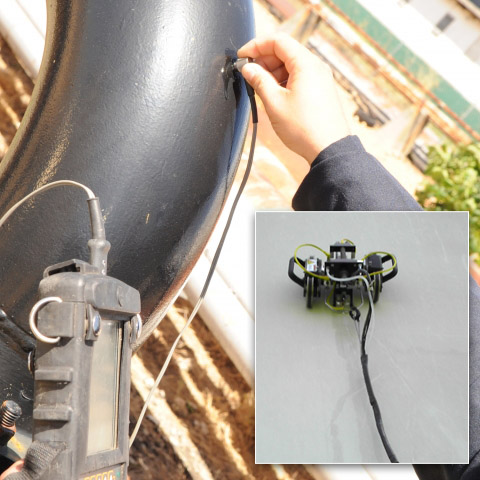
Ultrasonic Thickness Testing
Uses the transmission of high frequency sound waves into a material to detect thickness variations throughout metal and on-metal test specimen.

Magnetic Particle
Test method for detecting discontinuities at or near the surface of material, performed with either visible or fluorescent depending on the required sensitivity.
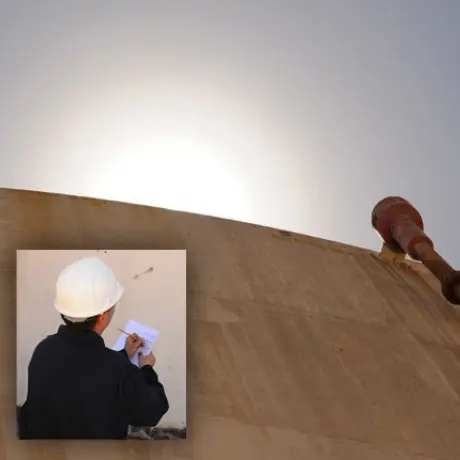
API Inspection Services
Project Specialists API inspection and testing services are performed in compliance with all API standards and recommended practices by certified 510, 570, and 653 inspectors.
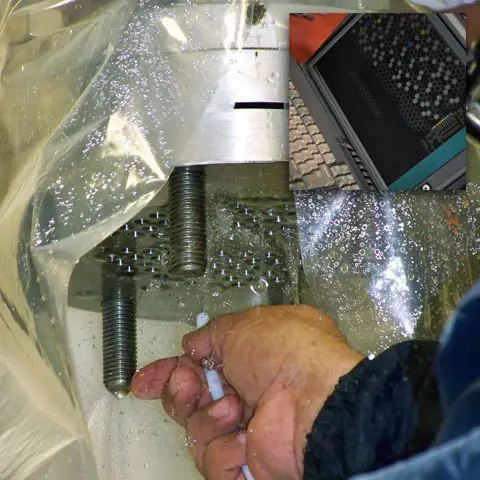
Electromagnetic (Eddy Current)
Inducing alternating magnetic field applied to a conductive material, can be identified on the test specimen due to current discontinuities.
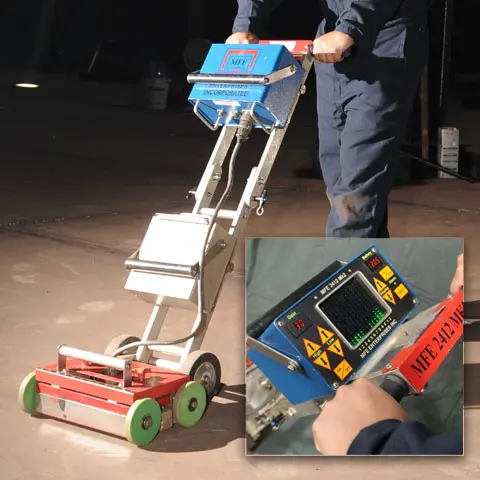
Magnetic Flux Examination (MFE)
Volumetric test to detect under-side corrosion in large steel structures, most commonly on storage tanks.
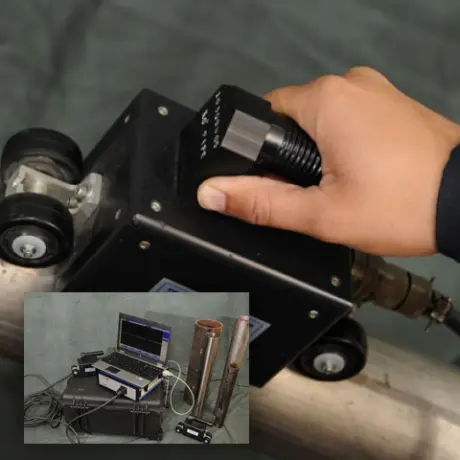
Low Frequency Electromagnetic Technique
Detects flaws by measuring the magnetic field directly over the flaw area with sensor coils.
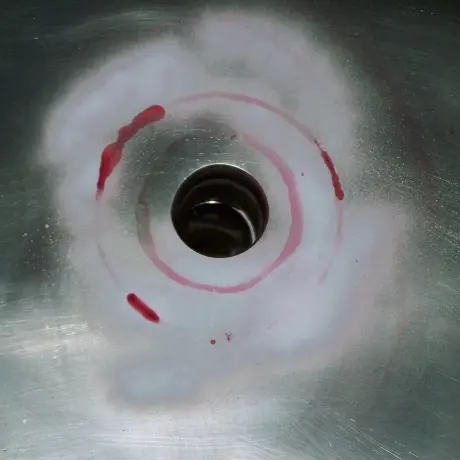
Liquid Penetrant
This technique is used to detect surface imperfections of nonporous materials by applying dye to the surface to be drawn into openings.
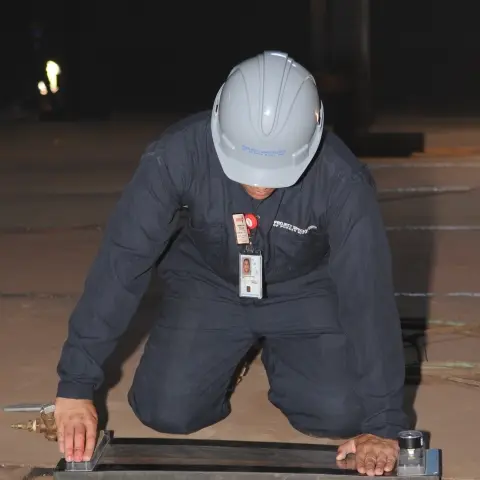
Leak Testing
Verify leakage in tanks, piping, jacketed tanks, hoses, and welding joints. Methods include: vacuum box, pneumatic, hydrostatic, and ultrasonic leak tests.
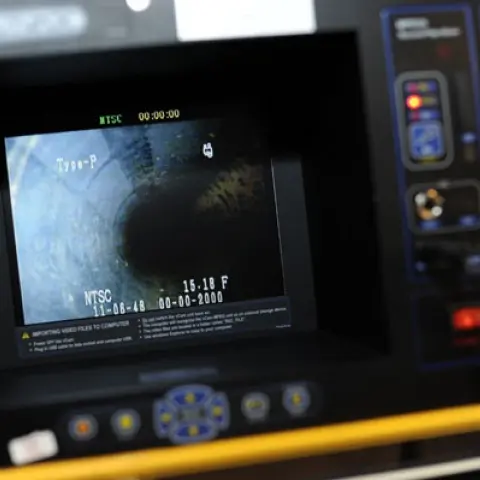
Remote Visual Inspection
This test provides a remote view of areas that are inaccessible or otherwise difficult or impossible to see.
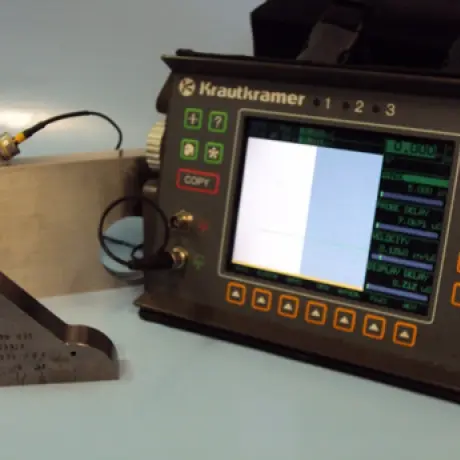
Flaw Detection
Employs ultrasonic waves that are guided at an angle to primarily inspect welds in search for internal flaws, providing fast and safe reliable results.
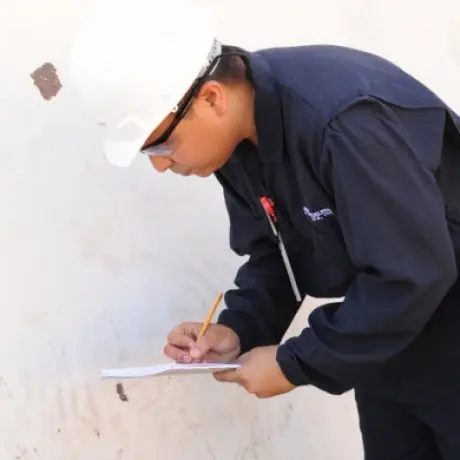
Visual Inspection
Inspectors are trained in detecting flaws and other imperfections in the materials they are examining, while aided by modern equipment for remote testing.